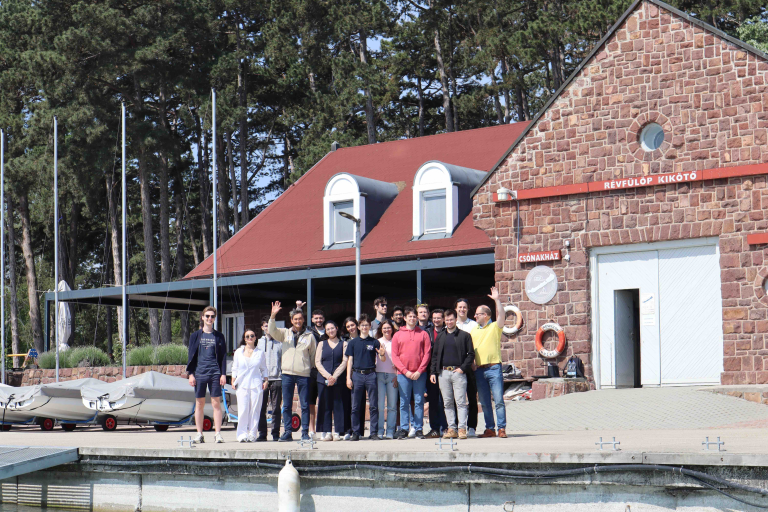
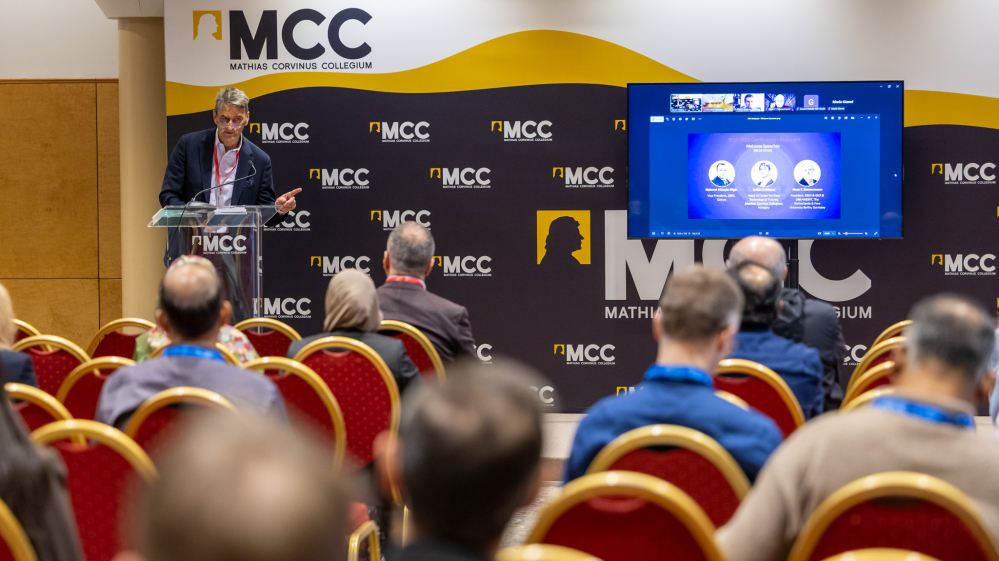
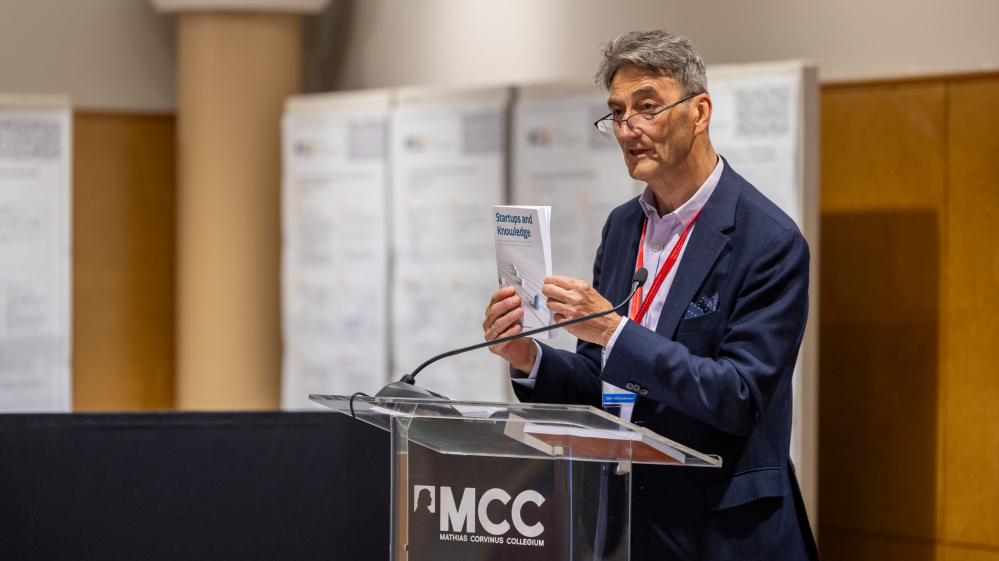
BUDAPEST — The 55th EBES (Eurasia Business and Economics Society) Conference, recently hosted by Mathias Corvinus Collegium (MCC) in Budapest, brought together leading global scholars, policymakers, and young researchers. The prestigious three-day event commenced with opening remarks from distinguished academic leaders, including Professor Mehmet Huseyin Bilgin (Vice President of EBES), Professor Zoltán Cséfalvay (Head of the Center for Next Technological Futures at MCC), and Professor Klaus F. Zimmermann (President of EBES, GLO & UNU-MERIT).
Following the welcome speeches, MCC students and researchers took center stage, presenting their latest findings across various fields of economics, management, and technology policy to an international audience.
Deep Dives into AI, Scaling, and Innovation Dynamics
The first day opened with a strong focus on high-tech ecosystems during the Economics of Innovation session. Two MCC researchers tackled the critical challenges facing European tech growth. Róbert K. Gombási presented his paper, “AI Scaleups in Europe: Growth, Leakage, and the Maturation Effect,” exploring how artificial intelligence ventures scale across the continent. This was closely complemented by Györk Pünkösti’s presentation on “Scaling European Scaleups: Cohort Dynamics, Stage Leakage and Maturation Effects,” which provided a structural look at the lifecycle and retention of high-growth firms in Europe.
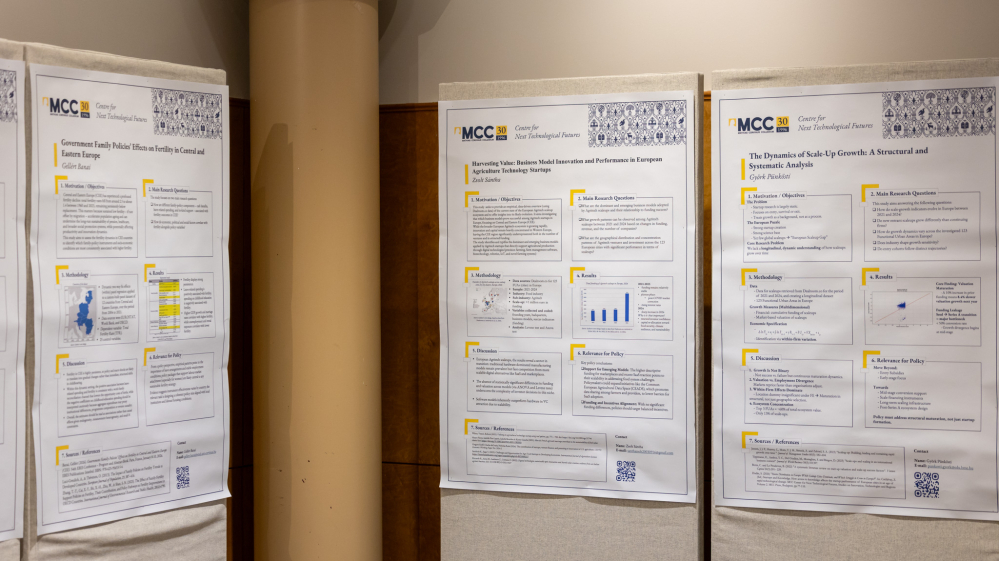
In parallel, the Labor Economics session featured Gellért Banai, who addressed pressing demographic questions with his research titled, “Do Family Policies Affect Fertility? Evidence from Central and Eastern Europe.”
Geopolitics, Finance, and Sustainable Tech
As the conference progressed into the Corporate Finance session, Marcell Kovács shifted the lens toward global technology policy and supply chains. His presentation, “Firm-Level Valuation in the New Wave of Techno-Nationalism: The Cases of TSMC Phoenix, Intel Magdeburg, and Rapidus Japan Investments,” analyzed how escalating geopolitical competition impacts mega-investments in the semiconductor industry.
The afternoon Management sessions highlighted innovation in agriculture and the fundamental mechanics of individual creativity:
Zsolt Sántha discussed sustainable tech ecosystems in his paper, “Harvesting Value at Scale: Business Model Innovation, Funding Dynamics, and Scale-Up Growth in European Agritech Startups.”
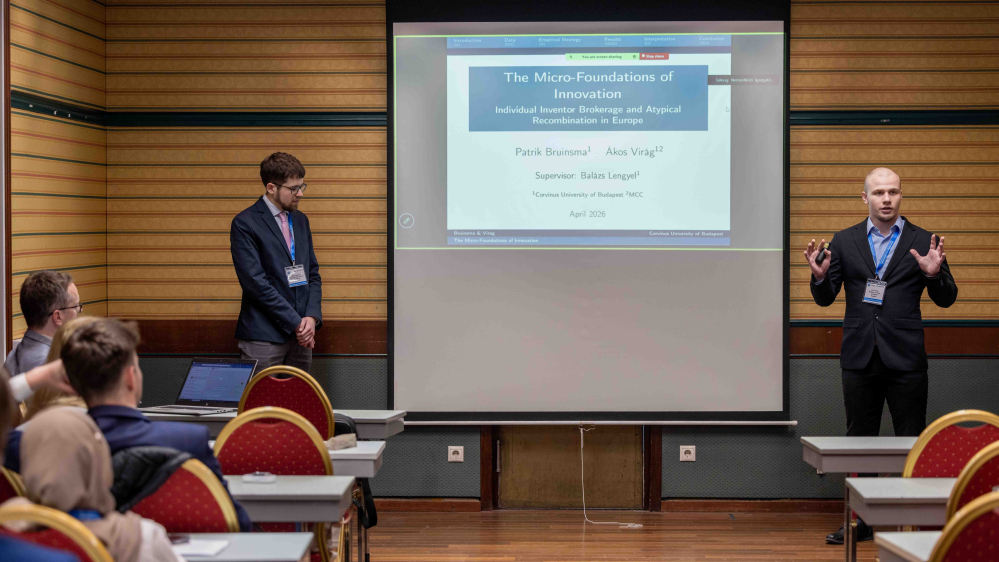
Ákos Virág (MCC), collaborating with Patrik Bruinsma and Balázs Lengyel from the Corvinus University of Budapest, presented “The Micro-Foundations of Innovation: Individual Inventor Brokerage and Atypical Recombination in Europe,” mapping how individual networks drive breakthrough ideas.
Mapping the Future of Healthcare Technology
On the second day of the conference, MCC’s representation continued into the Management II session. Csenge Vörös presented her timely research, “Scaling the European Health Tech Ecosystem: A Structural Taxonomy and Longitudinal Growth Analysis,” offering a comprehensive framework for understanding how healthcare technology companies mature over time.
By hosting the 55th EBES Conference and fields such diverse research, MCC continues to foster an academic environment where next-generation researchers can contribute meaningful data and insights to global economic and management dialogues
 April 16, 2026 at 9:00 AM - April 18, 2026 at 5:00 PM
 Matthias Corcinus Collegium